Exterior or interior: the decisive question
The core is simple: exterior sun protection stops the solar radiation before it passes through the glass. What is stopped outside cannot heat the room. Interior systems such as roller or pleated blinds, by contrast, only take effect once the radiation is already in the room through the pane; they reduce glare, but the heat largely stays inside.
In numbers: a good external venetian blind or awning keeps up to 90 percent of the solar energy away, an interior curtain only around 30 to 40 percent. For heat protection there is therefore hardly a way around an exterior solution. Interior systems play to their strengths in glare control, privacy and design and complement exterior shading ideally.
The systems at a glance
Several proven exterior systems are available for summer heat protection, each with its own profile. Which one fits depends on facade, use and architecture:
- 01External venetian blinds (slat blinds): the classic on Zurich new builds. Individually adjustable slats regulate light and heat precisely; even with the blind closed, softened daylight remains.
- 02Roller shutters: maximum blackout plus added burglary and noise protection, ideal for bedrooms.
- 03Folding-arm awnings: shade the terrace and the rooms behind it over a large area without blocking the view out.
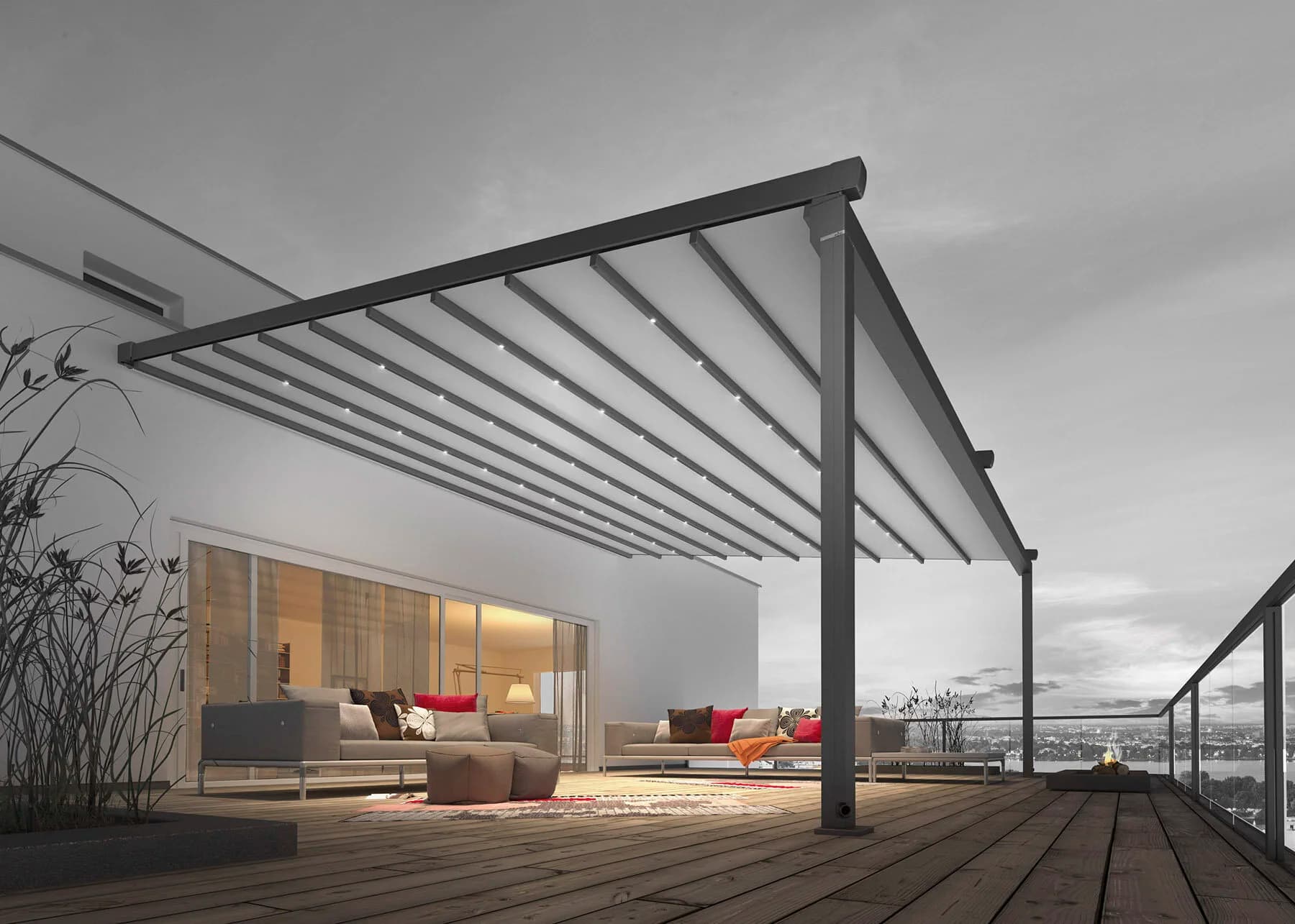
- 04Pergola awnings such as the PergoTex systems: fixed, wind- and rain-stable shading for terrace and large window fronts, with a fabric roof instead of slats.
- 05Vertical awnings (zip screens): taut fabric screens in front of the facade that keep heat out while allowing a softened view outside.
Choosing by facade orientation
The facade orientation determines which sun protection makes sense. Taking it into account saves money and gives a better result, because each orientation has a different sun problem.
The south facade gets the most sun in summer, but steeply from above; here venetian blinds and awnings with their horizontal shading work particularly well. East and west facades are more critical because the sun sits low: the low morning and evening sun undercuts horizontal systems, which is why vertically guided screens or full-coverage roller shutters play to their strengths here. The north facade needs hardly any heat protection and often manages with interior glare control.
- 01South: venetian blinds or awnings; the high midday sun is reliably intercepted.
- 02East and west: vertical awnings or roller shutters against the low, glaring morning and evening sun.
- 03North: interior glare control usually suffices; real heat protection is rarely needed.
Saving energy with the right shading
Effective sun protection considerably lowers the cooling load in summer. Keeping the heat outside means less need for a fan or a mobile air conditioner, whose electricity use weighs noticeably in the Zurich high summer. In new builds with comfort ventilation or air conditioning, automatic exterior shading measurably reduces the cooling energy.
The effect works both ways: in winter, roller shutters can be closed at night and act as an additional insulating layer in front of the window, dampening heat loss. Sun protection is therefore not a pure summer topic but a year-round contribution to the building's energy balance.
Automation: shade before it gets hot
The biggest comfort gain lies in automation. A sun sensor extends the shading as soon as a facade comes into the sun and prevents heating up before it happens. This is decisive precisely when no one is home during the day: without automation you come home in the evening to an already overheated flat, with it to a room that stayed cool.
A wind guard retracts awnings in gusts in good time and protects them from damage, an indispensable safeguard for free-standing systems. Modern drives from manufacturers such as Somfy can be controlled by app and schedule and integrated into the smart home. We plan the automation so it works invisibly in daily life while manual operation always keeps priority.